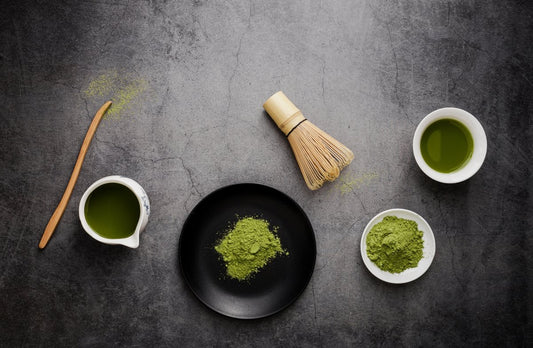
Matcha has become a wellness must-have, but what exactly is it? Unlike regular green tea, matcha is a finely ground powder made from shade-grown tea leaves, offering a more concentrated source of antioxidants, caffeine, and L-theanine. Whether you’re a tea lover or new to matcha, this guide will explain what matcha is, how it’s made, and why it’s so good for you.
What Is Matcha?
Matcha is a Japanese green tea powder made from high-quality shade-grown tea leaves. Before harvesting, the tea plants are covered to increase chlorophyll production and enhance amino acids, giving matcha its vibrant green color and unique umami taste.
Unlike traditional green tea, where leaves are steeped in water and discarded, matcha is whisked directly into water or milk, meaning you consume the entire leaf—and all of its powerful nutrients.
How Is Matcha Made?
The production of matcha follows a centuries-old Japanese tradition:
- Shade-Grown Cultivation – Tea plants are shaded for about 3–4 weeks before harvest, boosting chlorophyll and L-theanine levels.
- Hand-Harvested Leaves – Only the youngest, most tender leaves are picked for the best quality.
- Steaming & Drying – The leaves are quickly steamed to prevent oxidation, keeping their bright green color.
- Stone Grinding – The dried leaves are ground into a fine powder using traditional granite stone mills.
At Genuine Tea, we source our Kato Matcha Organic Spring Harvest from Uji, Kyoto—one of Japan’s most renowned matcha-growing regions.
Matcha Benefits: Why Drink It?
Matcha isn’t just a trendy drink—it’s a nutrient powerhouse with scientifically proven health benefits:
- Rich in Antioxidants – Matcha contains 137x more antioxidants than regular green tea, helping to fight free radicals and boost immunity.
- Natural Energy Boost – With 60-70 mg of caffeine per serving, matcha provides a steady release of energy without the jitters.
- Enhances Focus & Relaxation – Thanks to L-theanine, matcha promotes calm alertness and reduces stress.
- Supports Metabolism & Weight Loss – Studies show that matcha can help increase fat oxidation and calorie burn.
- Detoxifies the Body – High in chlorophyll, matcha helps remove toxins and supports overall wellness.
How to Make Matcha
Making matcha is easy! Here’s how to prepare a traditional matcha tea:
- Sift 1 teaspoon of matcha powder into a bowl.
- Add 2 oz of hot water (not boiling, around 175°F).
- Whisk vigorously in a zig-zag motion using a Matcha Essentials Bundle for a smooth, frothy finish.
- Enjoy as is or add steamed milk for a matcha latte.
Matcha vs. Green Tea: What’s the Difference?
| Feature | Matcha | Regular Green Tea |
|---|---|---|
| Consumption | Whole leaf (powdered) | Steeped leaves |
| Caffeine | 60-70 mg | 30-50 mg |
| Antioxidants | 137x more than green tea | Lower levels |
| Flavor | Smooth, umami, slightly sweet | Light, grassy |
Matcha is a more concentrated, powerful version of green tea, making it a great choice for those looking for maximum benefits.
Matcha FAQ
What does matcha taste like?
Good-quality matcha has a rich, vegetal, umami-forward flavour with natural sweetness and a creamy mouthfeel. Lower grades taste bitter, grassy, or chalky. Ceremonial grade is the smoothest; culinary grade is sharper and designed to hold up in lattes and baking.
How much caffeine is in matcha?
A standard 2-gram serving of matcha contains roughly 60 to 70 mg of caffeine, about two-thirds of a cup of coffee. Because matcha also contains L-theanine, the caffeine tends to release more gradually, which many drinkers describe as focused energy without the crash.
Is matcha healthier than green tea?
Matcha delivers a more concentrated dose of antioxidants, caffeine, and L-theanine than steeped green tea because you consume the whole leaf as powder rather than an infusion. One cup of matcha can contain up to 10 times the catechins of regular steeped green tea.
What is the difference between ceremonial and culinary grade matcha?
Ceremonial grade is made from the youngest shade-grown leaves and is meant to be whisked with water and drunk plain. Culinary grade uses slightly more mature leaves, has a stronger flavour, and is designed for lattes, smoothies, and baking where milk or other ingredients balance the taste.
How do you prepare matcha at home?
Sift 1 to 2 grams of matcha into a bowl, add about 60 ml of water heated to 70 to 80 degrees Celsius, and whisk briskly in a zig-zag motion with a bamboo chasen until a fine foam forms on the surface. For a latte, use the same base and top with 150 ml of steamed milk.
Try Premium Japanese Matcha
If you’re ready to experience high-quality matcha, try Kato Matcha Organic Spring Harvest—sourced from Uji, Kyoto for the perfect balance of flavor and nutrition. For a complete matcha experience, check out the Matcha Essentials Bundle, which includes everything you need to prepare matcha at home!
🍵 Ready to upgrade your tea game? Explore our matcha collection today! 🍵