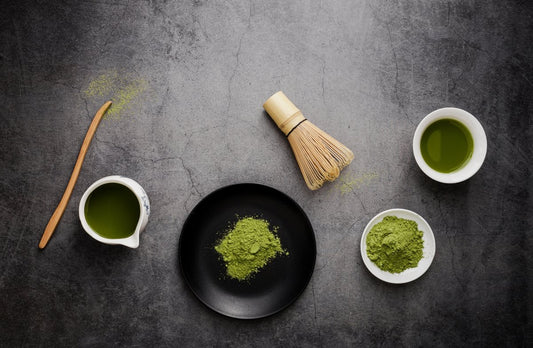
Most cafés will gladly offer a house blend and a single-origin espresso, one daily workhorse and one special. That same two-option structure barely exists for matcha, and it is a large missed opportunity.
Moving from a blended barista matcha to a single-farm Uji spring harvest costs roughly twenty-five cents more per latte. The upcharge customers will pay for that swap is usually a dollar or more.
That gap is the opportunity, and it is sitting unused on most matcha menus in the country. What follows is the case for the second tin: what it actually costs, what to charge for it, how to name it on the board, and how to keep it moving.
Key Takeaways
- A second matcha is a calculated menu decision that every café should consider.
- The cost gap is small. A house blend and a single-origin spring harvest are pennies apart per gram, so a reserve serve adds well under a dollar to your cost.
- A $1.00 to $1.50 upcharge covers the tea several times over, and the customer ordering it is not shopping on price.
- A whisked reserve serve uses half the dose and no milk, which makes it quietly the best-margin drink on your bar.
- Protect the entry price. If the house matcha stops being the accessible option, you have repositioned matcha as a luxury and lost volume.
Why One Matcha Is the Safe-but-Boring Default
Most coffee shops run one matcha, and the logic is familiar. Every extra powder is a second scale setting, a second recipe card, and a second tin to keep fresh. Nobody adds a SKU for fun.
But you already solved this exact problem on the coffee side. A house espresso plus a rotating single origin is two grinders, two dial-ins, and two things to run out of, and cafés run it anyway because the second option earns its keep. Matcha now carries real volume on most bars. It is still being treated as one line item.
What one SKU cannot do is answer the customer leaning over the counter asking where the tea comes from, or capture the person who would happily have paid a premium for something whisked properly in water and instead ordered the same honey oat latte as everybody else.
How it fits depends on your room. A high-volume drive-through can run the second tea as a limited feature rather than a permanent line. A café with a tea-curious regular base, a slower counter, or positioning that leans on sourcing should treat it as a standing menu item. Our guide to matching matcha grade to the drink you are making works the same problem from the buying side.
The Two Jobs a Matcha Menu Has to Cover
The second tea works when it does a different job, not when it carries a fancier word on the bag.
A house matcha is built for milk. It needs enough body and umami backbone to still read as tea underneath twelve ounces of oat, which is why blends and later harvests do the job well. Our Barista Matcha is exactly that: organic, spring harvest tencha only, shaded 20 to 30 days, blended from Kagoshima in Japan and Guizhou in China, and formulated so the green survives contact with milk.
A reserve matcha is built for the spotlight. Katō Matcha Spring Harvest comes off the Katō family farm in Uji, Kyoto, shade-grown for 30 days and stone-milled to our order. It pours a bright jade green with no astringency. Put it under a 16oz iced oat latte with vanilla syrup and you have spent premium money to erase the thing you paid for.
Two teas, two drinks, two reasons to order. That is a menu, not an upsell.
What the Upcharge Actually Costs You
Japanese matcha has repriced hard: first flush tencha in Kyoto went from JPY 5,500 per kilogram in 2024 to JPY 14,333 in 2025 (Perfect Daily Grind, August 2026) in some auctions. Even though we contract buy to avoid these price swings, the pressure is put on companies like ours and cafés like yours. Having a more affordable matcha with the option for a premium upcharge is exactly the decision that our most successful café partners are glad they made
Second, volume. The reserve will be a small share of your matcha orders, and that is the design rather than a disappointment. Its return shows up in margin per serve and in what it signals about everything else you pour.
Keep an Entry Price on the Board
If you introduce a reserve matcha and quietly raise the house latte to sit closer to it, you have not added an option. You have repositioned matcha as a luxury and taught your regulars to order something else. The house matcha is the floor, and the floor should not move.
The reserve is a ceiling. Its job is partly to be ordered and partly to make the house price look like the reasonable choice it is. Simonson and Tversky showed in the Journal of Marketing Research in 1992 that an option gains appeal simply by sitting between extremes.
There is a real audience for the upper tier. Innova reports that two in five consumers in the US and Canada say they would pay more for food and drink with transparency on ingredient origin and supply chain (Innova Market Insights). The direction matches what happens at a counter: some people want to know whose farm it came from, and they will pay for the answer.
Different Harvests, Different Jobs
The reason two matchas work is agricultural, not marketing.
Spring harvest leaves, picked after a long shading period, builds the amino acid profile that exudes sweetness and umami and suppresses bitterness. Ideal for matcha cortados, usucha, unflavoured lattes. Later harvests carry more body and more structure, which is what you actually want fighting through oat milk and syrup.
So the tea you would call "better" in a bowl can sometimes the worse choice in a latte cup. These teas are built for different drinks, and running both is how you stop asking one powder to do a job it was never made for. Our guide to what shade days and harvest timing change in the cup is worth handing to whoever writes your recipe cards.
Putting Two Matchas on a Board Without Confusing Anyone
Naming does most of the work. "Matcha Latte" and "Reserve Matcha, Uji" tells a customer everything they need. Keep grade language off the board: "ceremonial" and "culinary" are vague, and they invite an argument your barista cannot win during a rush.
Give staff one sentence, not a lecture. Something like: the house is a blend built for milk, the reserve is a single farm in Kyoto and recommend a stronger drink with no sugar so you can actually taste it. Accurate, short enough to say while steaming, and it tells the customer what they are choosing between.
Decide in advance whether you will make the reserve as a latte on request. Plenty of cafés will, and there is no harm in it - as long as you allow the matcha to shine, the way it deserves to.
Frequently Asked Questions
Should a small café run two matchas?
Yes, when the second one is a genuinely different drink. Small rooms are often better placed for this than large ones, because a slower counter gives staff time to explain the choice, and that conversation is what sells the reserve.
How much should I upcharge for premium matcha?
$1.00 to $1.50 over the house drink covers the tea several times over at current wholesale pricing. Price the whisked serve on its own line rather than as a modifier, since it is a different drink with no milk cost.
Can I use the same matcha for both tiers?
No, and if you could there would be no second tier. The distinction customers can taste is a first flush whisked in water against a blend under milk. Two grades of the same style in the same latte is a difference almost nobody detects.
Will customers actually order the expensive one?
Enough of them will. Expect a minority of your matcha orders and price it so that minority is profitable. The reserve also works for you when it is not ordered, by making the house price read as the sensible choice.
Where to Start
Run it as a four-week trial rather than a permanent menu change. One reserve serve, whisked in water, priced properly.
If it works, your staff will start enjoying the conversation, which is usually the first signal to appear. If it does not, you are out one or two 30g tins, which is the cheapest menu experiment on your bar.
We ship matcha and loose leaf tea to cafés, restaurants, and hotels across Canada, and we will send samples of both the 1kg barista blend and the single-origin Katō spring harvest so you can taste the difference at your own dose before you commit. If you want to talk through what fits your bar, open a wholesale account and ask for matcha samples.