6 minute read
Most coconut matcha is coconut in name only. It usually means a scoop of matcha, a splash of milk, and a coconut syrup doing the actual flavouring, which is mostly sugar wearing a tropical label. Our Coconut Matcha works differently. It is two ingredients, and the coconut is real.
Here is what that means, why coconut and matcha belong together, and how to make a cup at home that tastes creamy and clean rather than sweet and artificial.
Why coconut and matcha work together
Matcha has a green, grassy backbone with a gentle bitterness and a savoury, umami depth. That is what makes it interesting, and also what makes it a little demanding on its own. Coconut is the easy answer. It brings a soft, rounded creaminess and a mild natural sweetness that settle matcha's edges without covering the tea underneath.
Anyone who has made a matcha latte with coconut milk already knows the two get along, since coconut lends body and a smooth finish that suits matcha's texture. What is different here is that the coconut is built into the powder itself, so you get that creamy character before you have added a single other thing. Whisked in plain water, it already tastes soft and a little sweet.
What's actually in our Coconut Matcha

Two things. Katō Matcha Summer Harvest, and real coconut milk powder. No added sugar, no artificial flavours.
Most flavoured matcha reaches for syrup or a coconut-identical flavouring to carry the taste, because real coconut is trickier to work with and costs more. Ours skips the shortcut. The coconut is real coconut milk powder mixed right into the matcha, which is why the powder smells faintly of coconut before it meets any water.
The matcha underneath is premium matcha from the Katō family in Uji, Kyoto, the same growers our founders Dave and Sarah have sourced from for years. The Summer Harvest is the bolder, more robust of their matchas, and that is on purpose. A delicate matcha would disappear under coconut. A sturdier one keeps its footing, so the cup still tastes like green tea with coconut rather than coconut with a green tint.
One detail if you care about where things come from: unlike our loose-leaf teas, which are blended and packed in Ontario, the Coconut Matcha is milled and blended in Japan, close to where the leaf is grown. It comes in a 40g tin and a larger 250g size, so a small tin runs roughly twenty to forty servings depending on how strong you like it.
The matcha half: calm energy, not a jolt
Matcha is powdered green tea, and because you whisk the whole leaf into water rather than steeping and discarding it, you take in more of the leaf than a brewed cup gives you. Two of those compounds explain why matcha feels different from coffee.
A serving carries caffeine, though less than a typical coffee, somewhere around 50 to 70 milligrams for a standard scoop. Sitting alongside it is an amino acid called L-theanine, and the two behave differently together than caffeine does alone. In a controlled study of matcha's effect on mood and cognition, researchers pointed to this caffeine and L-theanine pairing as the reason matcha is linked to a state people describe as calm alertness: awake and focused, without the wired edge. Matcha also carries catechins and the chlorophyll that gives the powder its green colour, part of the nutritional makeup that sets it apart from steeped green tea.
Keep it in proportion. The lift is real and it is smoother than coffee, not a different species of energy, and it lands a little differently from person to person. If steady focus is what you are after, this is the half of the drink doing the work, and we build a whole focus and productivity collection around it.
The coconut half: flavour first
Here is the honest part, since coconut gets talked about as a health food more often than it earns. The coconut in a serving of this matcha is a small amount of real fruit, added for taste and texture rather than as a nutrition play. What it does well is flavour: it makes the cup creamy and lightly sweet on its own, which is the whole point.
That gentle sweetness is also why you can skip the sugar most coconut drinks lean on. The coconut is doing that job already, softly, and you decide whether it needs anything more. For a lot of people it does not.
How to make it at home
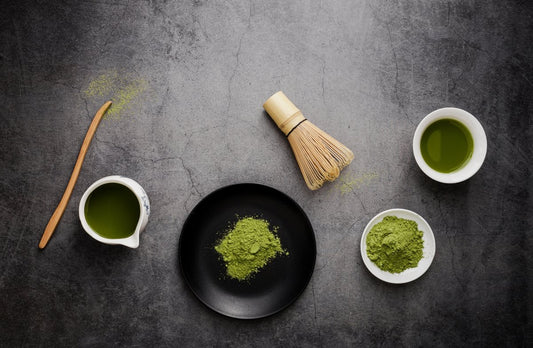
Matcha rewards a couple of small habits. Use water that is hot but not boiling, around 80°C, since boiling water scorches the powder and turns it bitter. Whisk it properly, ideally with a bamboo whisk, until the top is smooth and lightly foamed. Split into steps, it is easy.
The clean way: whisked in water
This is how to taste what you actually bought. Sift or spoon half to one teaspoon of Coconut Matcha into a bowl, add a splash of hot water, and whisk into a smooth paste. Top up with more water, hot or poured over ice, and the coconut and the green tea both come through, creamy and clear, with nothing added. A proper whisk and bowl make this easier, though a small kitchen whisk works in a pinch.
The creamy one: a coconut matcha latte
Coconut matcha was almost built for this. Whisk your matcha with a little hot water first, then pour it over a glass of ice and the milk of your choice. Oat milk keeps it fully dairy-free and rounds out the coconut, and coconut milk doubles down on it if you want the tropical version turned up. Because the sweetness comes from the fruit and the milk rather than syrup, the latte stays creamy without getting sugary, and you hold the dial.
The refreshing one: sparkling
Whisk the matcha with a small amount of water, then top with cold soda water over ice. You get a light, fizzy cup where the coconut reads as a clean, tropical note rather than a creamy one. It is the most refreshing way to drink it on a warm afternoon.
Coconut Matcha also earns its place in the kitchen. It folds beautifully into baking and no-churn desserts, and if you want a starting point, our matcha brownie recipe takes well to a coconut swap.
Is coconut matcha healthy?
Fairly, with the caveat that the answer depends on what ends up in the cup. Whisked in water, it is green tea and a little real coconut, which is about as clean as a flavoured drink gets. Build it into a heavily sweetened café latte with syrup and whipped cream and it becomes a treat, which is fine as long as you know that is the choice you are making. The advantage of making it yourself is that the choice is yours, and our version hands you two honest ingredients and stays out of the way.
That is the idea behind it. Real matcha, real coconut, and room to make it yours. If you want to try it, you can find Coconut Matcha here in 40g and 250g pouches. And if you are still working out which matcha suits you, this guide walks through the differences between the Katō harvests.