What "Slow Down Unplug Drink Tea" means to us.
We give 1% of every purchase to the Canadian Mental Health Association. Not 1% of profit, and not 1% in a good quarter. One percent of what you spend, whether we had a strong month or a bad one.
Key Takeaways
- The commitment is purchase-based, not profit-based. One percent of every order goes to CMHA regardless of our margins that month.
- CMHA has run community mental health services since 1918, today through 11 divisions and 75 branches in more than 330 communities, reaching over 1.3 million people a year.
- Provinces and territories spend an average of 6.3% of health budgets on mental health. France spends 15%, Germany 11%, the UK and Sweden 9% (CMHA, November 2024).
- Tea is a ritual, not a treatment. The evidence supports a calming effect and a reliable daily pause, a critical aspect of practicing mindfulness daily.
What the 1% Commitment Actually Is
One percent of every purchase, calculated on what you pay rather than on what we keep, donated to the Canadian Mental Health Association.
The distinction matters more than it sounds. Profit-based pledges are easy to write and easy to quietly zero out, because a thin year produces a thin donation and nobody outside the company ever knows. A purchase-based commitment is arithmetic. It does not negotiate with our balance sheet.
We are a small company, and 1% of our sales will not reform a national care system. We would rather say that plainly than dress it up. What it does is make the giving structural instead of occasional, which is the only version we were interested in committing to publicly. The short form lives on our mental health page.
What CMHA Does
The Canadian Mental Health Association is a national charity that delivers community-based mental health programs, advocacy, and public education across Canada. It was founded on April 22, 1918 as the Canadian National Committee for Mental Hygiene, after soldiers returned from the First World War to prisons and asylums rather than treatment. It is the oldest and most extensive community mental health organization in Canada.
The CMHA has a unique, decentralized structure unlike many other associations. It is a federation, not a singular head office: one national office, 11 divisions covering every province and one territory, and 75 community branches present in more than 330 communities. Together they reach over 1.3 million people a year through roughly 5,000 staff and 11,000 volunteers (CMHA).
Decentralization is essential in providing localized, relevant community-based care. That's who we wanted to support. Where hospital psychiatry treats crisis, community mental health is what exists before and after crises arise, and it is chronically the least funded part of the system. CMHA funds essential work like:
- BounceBack is free coaching built on cognitive behavioural therapy principles, for anyone 15 and up managing low mood, mild to moderate depression, anxiety, or stress. Workbooks plus a trained coach overseen by clinical psychologists, in English and French, at no cost.
- Living Life to the Full is eight 90 minute group sessions with a trained facilitator, run through local branches.
- Peer support and navigation helps people move through a system that is genuinely hard to navigate alone.
- Mental Health Week has run every year since 1951. The 2026 edition, May 4 to 10, is the 75th, themed "Come Together, Canada. Stronger connections, better mental health."
The Gap the 1% Is Aimed At
Canadian provinces and territories spend an average of 6.3% of their health budgets on mental health. France spends 15%, Germany 11%, the UK and Sweden 9%. CMHA has asked for 12%, in line with a Royal Society of Canada recommendation. Its State of Mental Health in Canada 2024 report found 2.5 million people with mental health needs were not getting adequate care.
Statistics Canada points the same direction. In 2022, more than 5 million Canadians aged 15 and older, about 18%, met the diagnostic criteria for a mood, anxiety, or substance use disorder in the previous 12 months. More than one in three of them, 36.6%, reported their care needs were unmet or only partially met (Statistics Canada, 2023).
There is a loneliness layer underneath it, that disproportionally affects the LGBTQ+ community. In the first quarter of 2024, 13% of people in Canada aged 15 and over said they always or often felt lonely. Among those aged 15 to 24 it was 17%, and among LGBTQ+ people 27% (Statistics Canada).
Why We Care About This As a Tea Company
The research on ritual is more interesting than the simplified, marketing version of it. A 2018 review in Personality and Social Psychology Review mapped the literature into three regulatory functions: regulating emotion, regulating performance and goal states, and regulating social connection (Hobson et al., 2018). A repeated, deliberate sequence of actions does measurable work, and heating water, measuring leaf, waiting out a timer, and holding a warm cup is a cheap one. Add someone else to the equation, and you're hitting that community mark. People have gathered over tea (and coffee - shout out to our favourite cousin) for millennia. Almost every nation has a thorough tea culture built on community gathering. Spilling the tea has never been healthier.
The physical aspect of drinking tea contributes something modest but real. In a randomized double-blind trial, 75 healthy men drank black tea or a matched placebo for six weeks. Fifty minutes after a laboratory stressor, cortisol had fallen further in the tea group, and they reported greater subjective relaxation (Steptoe et al., Psychopharmacology, 2007). A four week crossover trial gave 30 adults 200 mg daily of L-theanine, the amino acid nearly unique to tea. Against placebo, it produced reductions in self-rated depression, trait anxiety, and sleep quality scores (Hidese et al., Nutrients, 2019).
Despite all of these studies and health claims you'll find online, the best benefit of drinking tea is that you are HYDRATING!
Ritual Is Not Treatment
A tea ritual is a maintenance that sits alongside good sleep, regular movement, and staying in contact with people who know you, and it keeps a day from collapsing into one undifferentiated block of work. It is not treatment for depression, anxiety, addiction, or anything else with a diagnosis attached, and a cup of tea has never substituted for a clinician or a crisis line.
If you need more than a habit:
- 9-8-8: Suicide Crisis Helpline, free across Canada, 24 hours a day, English and French. Call or text 9-8-8. It launched November 30, 2023 and has answered more than 750,000 calls and texts (CAMH).
- BounceBack, free, CBT-based, open to anyone 15 and up.
- Your local CMHA branch, for community programs where you live.
Care first. Ritual holds the days together in between.
How to Build the Ritual
Four minutes, most days, is the whole ask. Repetition matters more than specifics, but three things make it stick.
Anchor it to something you already do. Right after you close your laptop, or before you pick up your phone in the morning. A habit attached to an existing habit survives. One floating in an open schedule does not.
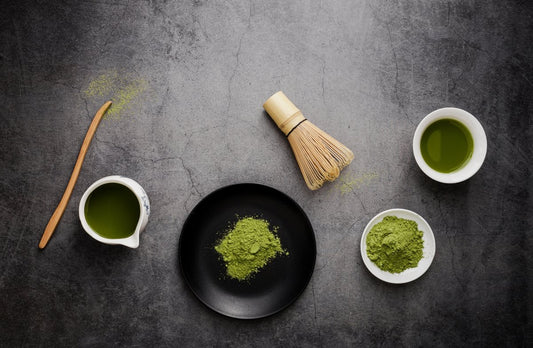
Use loose leaf, on purpose. The extra 30 seconds of measuring and steeping is not inefficiency, it is the point. A bag in a mug is a beverage. Loose leaf is a process, and the process is where your attention lands. Green tea or matcha in the morning, black tea mid-afternoon, something caffeine-free from our herbal or sleep range at night.
Do it with someone when you can. Given the loneliness numbers, and given what CMHA put at the centre of Mental Health Week 2026, this is the highest-value line in this section.
Frequently Asked Questions
Is the 1% based on revenue or profit?
Revenue. It is 1% of every purchase, calculated on what the customer pays, not on what the business keeps after costs. A profit-based pledge means a thin year quietly produces a thin donation, and we did not want a commitment that adjusts itself downward when things get hard.
What does CMHA do with donations?
Funds support community programs delivered through its 75 branches: free CBT-based coaching via BounceBack, group education via Living Life to the Full, peer support and navigation, suicide prevention, and public education including Mental Health Week. This is the part of the system that operates outside hospitals, and the part most exposed to funding gaps.
Does drinking tea improve mental health?
Controlled trials link tea and its L-theanine content to lower post-stress cortisol, greater subjective relaxation, and better self-rated sleep. Observational research tying tea to lower depression risk is mixed and cannot establish cause. Tea is best understood as a ritual that supports ordinary stress management, not as treatment for mental illness.
The best benefit of drinking tea is that it makes water delicious, and you are hydrating while drinking it. Stay hydrated!
The Short Version
Mental health care in Canada is underfunded relative to comparable countries, and the community services that catch people before and after a crisis are the most underfunded part of it. CMHA has been building that layer since 1918. One percent of what you spend with us goes there, every order, regardless of our year. We are not going to tell you a cup of tea fixes anything, but it does give you a reliable four minutes in a day that otherwise contains none.
Browse our teas, read the full commitment, or find CMHA in your own community. If you run a cafe and want the same commitment attached to your tea program, open a wholesale account.